

Posts tagged as:

frugality

5 Tips to Avoid the Weeknight Dinner Scramble

by Tara Kuczykowski on March 2, 2010 · 7 comments

Avoid Weeknight Dinner ScramblePhoto by massdistraction

The following is a guest post from Erin of Coupon Cravings:

I never got serious about meal planning until I had my third child. With two kids, it wasn’t so tough to put them in the car and pick up take-out. But having to wrangle three kids was not for me, so meal planning became a necessity in order to hold onto my sanity if nothing else. So if you find yourself without a dinner plan at 5 p.m., take a look at these five tips to get your meal plan in order.

Take Inventory. The first step is to take stock of what you have on hand, focusing on perishable foods, like meats, vegetables and dairy. It’s nice to pick up fresh broccoli and sweet potatoes when they’re on sale, but you’re not saving any money when they spoil and you end up throwing them away. Check out a web site like SuperCook, which suggest recipes based on what you have in the house. I can’t say it serves up ideal recipes every time, but it is a good place to start.

Scour the Ads. When the grocery ads come out, take a look at what’s on sale, then do a quick coupon search to see if you can get any of these items for less. Add these items to your shopping list then search over 100,000 recipes at a site like ZipList that lets you do both in one place. As a bonus, ZipList lets you add ingredients for any recipe to your online shopping list with one click. Plus, the ZipList Recipe Clipper lets you clip and save all your favorites from anywhere across the web in a universal recipe box.

Get Inspiration. I like to search online recipe sites, but then some days I like to get inspired by what other people are cooking. Laura at I’m an Organizing Junkie sponsors Menu Plan Monday each week and bloggers link up their meal plans for the week. I love to see what other moms are cooking, and many times I make the same meals. You can even download a free menu planner.

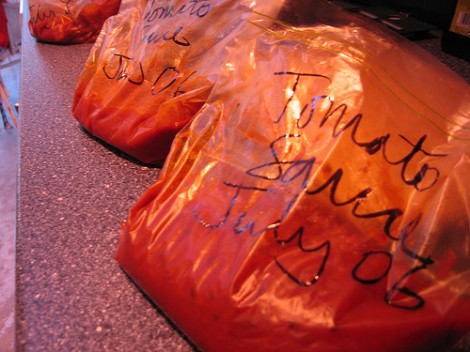
Freeze a Meal or Two on the Weekends. Try to make and freeze at least one to two meals that you can serve during the week. Just spend a couple of hours on the weekend whipping up a casserole, meatloaf or chili, then freeze them. These are perfect for those weeknights when soccer practice and dance class keep you out of the kitchen at the dinner hour.

Plan for Leftover Meals. Like Beth shared a couple of weeks ago, I love “leftover” meals -- and I’m not talking about eating the same exact dinner two nights in a row. One of my favorite cookbooks, Busy Moms Weeknight Favorites, has a section on Double-Duty Meals. These are meals in which you cook enough meat for two days, then prepare it a different way on each day. A family favorite is the Maple Glazed Pork Tenderloin that turns into Pork Fajitas on the second day. Delicious and so easy to make!

Do you have any good meal planning tips and suggestions? I’d love to hear what works for your family.

Erin Gifford is a working mom of four who blogs at Coupon Cravings. She also works for new online shopping list and recipe search service, ZipList, which will be rolling out free tools later this month to enable bloggers to integrate shopping lists into their web sites. She can found on Twitter at @eringifford.

{ 7 comments }

Saving Money on Medical ExpensesPhoto by apoxapox

We've been looking at different ways to save money on medical expenses, including ways to save on prescription medicines. Today, Joel from HealthInsuranceProviders.com helps us compare Health Savings Accounts and Flexible Spending Accounts:

If you've ever deal shopped for a great health insurance plan, you have likely encountered a lot of different terminology that can make the whole shopping process seem like a chore at best and a nightmare at worst.

Today, I want to share some down and dirty information on two of the biggest health insurance terminology culprits -- the Health Savings Account and the Flexible Spending Account -- so that you can begin your next health insurance shopping expedition with the knowledge you need to make an informed decision between these two types of money-saving health insurance options.

Definitions

First things first, let's define what each of these terms mean in the most basic sense, and then we'll dive into the details:

Health Savings Account (HSA) - The HSA is not health insurance but rather a savings account that is used for medical expenses, has some great tax benefits, and is designed to be coupled with a High Deductible Health Plan (HDHP).

Flexible Spending Account (FSA) - The FSA is also not health insurance but is a savings account provided through an employer's Cafeteria Plan that can either be used for medical expenses exclusively (called a Medical FSA and is very similar to an HSA) or for a broader range of things like dependent care expenses, FSAs have some attractive tax benefits and are typically only contributed to via payroll deduction.

Practical Comparison

All money contributed to a Health Savings Account is 100% deductible (up to certain IRS annual limits) as an above the line deduction on the front of the 1040 personal income tax return. There are no Adjusted Gross Income (AGI) phaseouts for HSA contribution deduction so the more money then the higher a tax bracket you are in and the more attractive the deduction becomes. HSA contributions can be made up the due date of the tax return so even if you have not maxed out your contributions for the prior tax year (2009) then you still may be able to make contributions to your HSA up until 4/15/10. All money in the HSA rolls over from year to year and grows tax free and comes out tax free as long as the money is used to pay for qualified medical expenses or the account holder reaches age 65.

All money contributed to a Flexible Spending Account comes right out of your paycheck and goes directly into the FSA without you having to pay any payroll taxes on that money. The two main types of FSA's are Medical FSA's and Dependent Care FSA's. Tax treatment for each type of FSA is essentially the same although one very important distinction to make between each of the two different types of FSA's and the HSA is that all of the funds in an HSA roll over from year to year while all funds contributed to an FSA do not. You must "use it or lose it" when it comes to contributions into a Flexible Spending Account so this means that it can be very important to properly gauge just how much money you want to deduct from your paycheck to go into your FSA.

Pros & Cons

HSA Pros

  • Above the line tax deduction with no income phaseout.
  • Tax free growth.
  • Money stays in account and rolls over from year to year.

HSA Cons

  • No savings on payroll tax.
  • Must have a qualifying High Deductible Health Plan in order to set up HSA.
  • Annual contribution limits set by the IRS.

FSA Pros

  • No payroll taxes paid on all contributions.
  • Two different options: Medical FSA & Dependent Care FSA.
  • Part of most employer provided benefit packages.

FSA Cons

  • Money contributed does not roll over from year to year.
  • No Federal income tax savings.
  • Plan is tied to employer not employee.

Which Should You Choose?

No one option is right for everyone so be sure to do your own research to decide if an HSA or a FSA will help you to save money on your health care costs!

Joel Ohman is a Certified Financial Planner™ and the owner of 3 different consumer comparison websites that help people save money when searching for the best credit card, shopping for affordable health insurance, or comparing different options on car insurance.

{ 18 comments }

Tips and Tricks to Combat Cooking Burn Out

by Tara Kuczykowski on February 12, 2010 · 21 comments

Freezer CookingPhoto by bowbrick

The following is a guest post from Beth at In Good Cents:

We all know the truth. Staying home and cooking is much more affordable and frugal than eating out.

I love to cook, but with three kids who think any time I’m in the kitchen is the perfect time to start acting crazy, I burn out quickly. After just a few days of cooking, I find myself on the phone with my sweet husband saying, “Please… please… please, stop on the way home and pick something up!”

The good thing about knowing your flaws is that you can plan ahead to combat them so that to the outside world you appear to have it all together, when you’re really flying by the seat of your pants.

I’ve come up with a few ways to combat my own tendency to burn out on cooking at home:

The Encore Meal

The art of the encore meal can be tricky to learn for some. Basically, it means spending time to make one thing that can be turned into something else just as delicious. You’ll do all or most of you prep work the first day, then spend the second day just changing it up bit.

Confused? Let’s see an example:

Day 1: Cook a whole chicken & serve with sides
Day 2: Take the left-over chicken and use it to make quick & easy Chicken Enchiladas

or

Day 1: Make Chili in your slow cooker
Day 2: Turn that Chili into Chili or Mexican Pizza, Chili Nachos, Haystacks, or Taco Salad

Once you master this art, you can turn one meal into two or three or even make it last an entire week if you don’t get sick of eating similar meals ever night.

Left-Over Night

When you cook at home a lot, you accumulate a lot of left-overs. You can enjoy them for lunches or take a page from my book and have a left-over night to empty the fridge.

This has become a family favorite for my kids. The rules are simple. I put out every left-over item in our refrigerator and the kids pick whatever they want. My husband and I have no say. This is the one day I can’t remind them to eat their vegetables or not to fill up on bread.

I bite my lip as my oldest daughter fills her plate with meat and bread and simply enjoy my night off.

Design Your Own Meal

Another tradition we’ve created in our household is Salad Night. Once a week, instead of me cooking, everyone makes their own meal. I lay out all the items we have in our house that could potentially be put in a salad (meats, nuts, vegetables, fruits, croutons, etc…) and everyone tosses in their favorites.

My kids have come up with some delicious and creative salads, and I get to smile because, unbeknownst to them, they are eating something extremely healthy. You’d be surprised what foods can be turned into a delicious salad.

But designing your own meal doesn’t have to be about salads. Another of my children’s favorites is something my mom used to call Kiddie Kabobs when I was little. She’d set out cheese squares, chicken chunks, olives, and more. Then we’d stick them all on a kabob stick with a marshmallow at the end and enjoy.

Cook & Freeze

The most obvious method to avoid cooking burnout fpr many of us is too cook and freeze. What does this mean? Whenever you’re cooking anything, double up the batch -- or even triple it -- so you can freeze the extras. Next time you’re not in the mood to cook or know you’ll be running behind, you can quickly pull something out of the freezer to thaw and toss in the oven.

Tada - a quick meal with absolutely no prep time!

Chicken & Spinach Parmesan Hot Pockets

I’m sharing this recipe, not only because it's the perfect freezer recipe, but also because it can be a delicious encore meal to follow Chicken Parmesan, Chicken & Spinach Salad, or even plain chicken breasts. Unfortunately, when I make it though, there are no left-overs.

Ingredients

Pocket
• 2 1/4 cup flour
• 1 egg
• 1/8 cup sugar
• 1 1/8 tsp yeast
• 1/3 cup milk
• 1/3 cup water
• 1/4 tsp salt
• 1/2 stick butter (melted)

Stuffing
• 2 cooked chicken breasts, diced into bite-size pieces
• 2 cups pasta sauce
• 1/2 cup fresh spinach
• 2 cups grated Parmesan

Directions
1. Mix and then kneed all of the pocket ingredients until well blended. Cover and set aside to rise for about 1 hour or longer.

2. Preheat oven to 350.

3. When done, separate dough into approximately 6-7 equal piece. Kneed, roll and flatten each piece into a circle. Top each circle of dough with chicken, douse with pasta sauce, layer with spinach, and sprinkle with Parmesan (leave a bit of Parmesan for later).

4. Gently close each circle of dough around the chicken stuffing mixture and seal by pinching. At this point, you can gently shape them as well, if needed. Top each one with remaining Parmesan.

5. Place on a foil-lined or greased cookie sheet or baking sheet and place in the oven for approximately 20-30 minutes until done. Serve hot.

What other methods do you use to fight cooking burnout? Do you have a favorite freezer recipe?

Beth is a wife and mother of three who shares tips and tricks at In Good Cents to teach her readers the skills they need to dramatically cut their own grocery budgets.

{ 21 comments }

The Best Valentine’s are Free

by Tara Kuczykowski on February 5, 2010 · 7 comments

Valentine's Day on a BudgetPhoto by C.P.Storm

The following is a guest post from Stacy from Saving in Akron:

Whether you’ve been married for 50 years or are in a budding relationship, everyone wants to show their sweetie some love on Valentine’s Day. With the current economic situation, money is very tight for a lot of people, and many people are still dealing with holiday expenses. However, you don’t have to spend a lot of money to show someone you care. In fact, some of the best ideas for spending Valentine’s Day are also the cheapest. You just need to get creative.

Here are some thoughtful yet frugal ways to show your significant other how much you care:

  • Forgo the presents this year and write your sweetie a heartfelt letter telling him/her how you truly feel. You might even consider putting it in a frame so they can look at it often. There is nothing more touching or special then receiving a declaration of undying love and devotion. This is a treasure they will guard for the rest of their lives.
  • Send your significant other on a scavenger hunt. Leave clues for them in various places around your house or around your town. The prize can be finding you, finding the letter you wrote above, homemade goodies or anything that you know is near and dear to your sweetie’s heart.
  • Make a homemade card or gift. If you’re a crafter, make them a scrapbook of your time spent together through the years. Or, knit or crochet a hat or a scarf. If you like to bake, make them their favorite dessert or some Valentine themed cookies. If you’re a guy, do some tasks around the house or finish some long forgotten projects. Nothing spells out love like a homemade gift.
  • Give  a gift that will linger on long past Valentine’s Day. Couponers love coupons, so make them a coupon book with “special” coupons for things like a massage, a day off from the kids, or no dishes for a week. This way, as they use the coupons up, you will be reminded all year of how much you love each other.
  • There’s no need to spend a lot of money going out to dinner. Cook dinner together and make it special by getting dressed up, having some wine, and of course, having someone else watch the kids. You can even light candles and spread out some rose petals. Light a fire if you have a fireplace. Relax and enjoy each other’s company.
  • Surprise your sweetie with your own wine and cheese tasting event. Buy a couple of bottles of reasonably priced and wine and several types of cheese that you’ve never tried. If you’re not into cheese, make a chocolate fondue with fresh or dried fruit.
  • Take your sweetie to a museum. Many museums offer free admission and if not, most museums charge a nominal admission. Spend the day strolling around the museum and perhaps stop and linger over coffee and dessert afterwards.
  • Spend the day learning something new together. Perhaps you’ve wanted to learn to play golf or ice skate. Maybe now is the time to set aside that day to learn it together.
  • Serve your honey breakfast in bed. There’s nothing nicer than being served breakfast in bed. Make it special with heart shaped pancakes or stuffed French toast and perhaps a single red rose in a vase.
  • Create a playlist of your favorite songs for your sweetie’s IPOD, or put together a compilation video/DVD of your home movies.
  • Give your sweetie a Valentine’s Day gift basket. You can put in some homemade goodies, or head off to the dollar store or the sample section of your favorite store to help you fill up your basket.
  • Go on a picnic. Head out to the park if you live where the weather is warm. If it’s colder where you live, have an indoor picnic in front of the fireplace. Fill up a basket with your favorite snacks and goodies, add in a nice bottle of wine, and enjoy.
  • Give your partner some free time. There’s nothing nicer for a busy mom or dad to get some time off away from the kids. Offer to take the kids out for the afternoon or arrange to have a friend watch them.
  • Recreate your first date. Show your significant other how much you love them by remembering all of the details of your first date.
  • If you’ve been married a while, renew your wedding vows. Saying you would marry her (or him) all over again means more than any gift you could give. You don’t need the big party this time either. Just stay in afterwards and snuggle.
  • Spend Valentine’s Day helping others who are less fortunate. Volunteer together. There are hundreds of opportunities available within your own community. Check out volunteermatch.org or serve.gov for ideas. You can also contact your local United Way office or any other local charity for additional opportunities.

Remember, Valentine’s Day isn’t about the size or the amount of money you spent on the gift, it’s about showing the person you’re with how much you care.

What's your best fun, frugal tip for Valentine’s Day?

Stacy blogs at Saving In Akron, where she shares with her readers how to save more so they can live better.

{ 7 comments }

Save Money on Prescription Medicine

by Tara Kuczykowski on February 4, 2010 · 17 comments

Saving Money on Prescription MedicinePhoto by DawnVGilmorePhotography

The following is a guest post from Kristin of Making Cents out of Life:

Throughout the country, times are tough. Job losses have forced people to work for minimum wage, if they can find a job at all. Other people have been out of work for months or are facing major illness or rising costs of living. Families are finding ways to cut from their budgets to make ends meet, trimming away all seemingly unnecessary spending so that they have enough for their basic needs.

One of the things that is being cut from many budgets is medication because the cost for those who are under-insured or uninsured can be unfathomable. People can't afford to think about the future, when that missed medication could cause greater hardship economically and physically. However, there are ways to cope with the exorbitant cost of medication, no matter your situation.

  • Talk to your doctor about less expensive generic medications. Your doctor might be willing to try a less expensive medication that will serve the same purpose, and save you serious money. He may ask that you allow him to monitor you more closely until he is sure the drug works.
  • Use generics whenever possible. Most medications have a generic equivalent that is just as good if not better, and a fraction of the cost. Before you leave your doctor's office make sure he has marked the prescription so that you may get generics.
  • Ask for samples of both short-term antibiotics and medications as well as routine medications. This can save you huge co-pays, especially for name brand medications. If you take a routine medication but see the doctor monthly, you should still ask for samples at your visits. The doctor may be able to provide you with samples until you get back on your feet.
  • Shop around with different drugstores. The cost of prescription medication is not universal. There can be a huge difference, as much as 30% in my experience, in the cost of a medication between one drugstore and another (for example CVS and Rite Aid). Your favorite drugstore might price match, so be sure to ask.
  • Use coupons for gift cards. Major drugstores often have coupons that offer gift cards (valued from $10 to $30) for new and transferred prescriptions. Some pharmacies will even accept their competitors' coupons each time you fill a prescription. Not only will you save on medication but you will have the gift card to pay for other things your family needs.
  • Understand your insurance. Perhaps I should have listed this first, but knowing and understanding what your insurance will cover will help you and your doctor develop a plan that will meet your healthcare needs.
  • Use prescription assistance programs. Partnership for Prescription Assistance (PPARX.org ) is a wonderful resource for finding a prescription program and other patient assistance programs that help pay for the medical care needs of those who are not able to afford them.
  • FREE and discounted prescriptions. Tara recently shared a list of pharmacies that offer SDfree antibiotics or $4 prescriptions. Be sure to call around to see if any of your medications are on their lists.

Knowing where to look and knowing what is available often is what stands between people and proper medical care. There is no shame in asking your doctor for samples or for applying for help when you cannot afford to pay anything. A person's health is much more important than pride.

Doing any of those things listed will not only save you money but could save your life. Take it from someone who's been there and had to learn from her own mistakes; cutting out medication from your budget can lead to dire consequences, and there is no reason that you should suffer them.

Kristin Thompson is searching to find her niche in the world of blogging and has found her passion in helping people save money on medical care and other necessities. Born a paraplegic, she now works with companies to promote products and services that benefit her readers and their families. Find more money saving tips and ideas for economical daily living at Making Cents out of Life.

{ 17 comments }